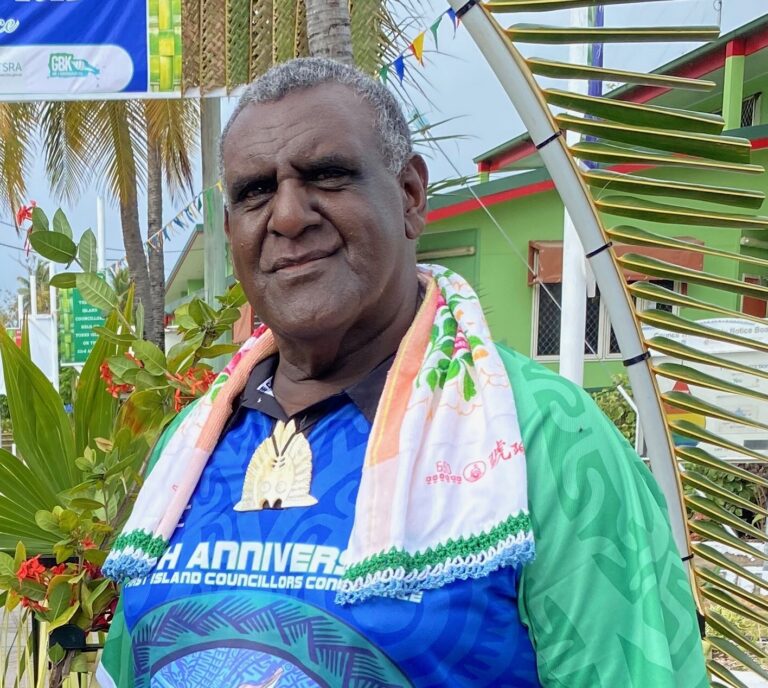
Uncle Gabriel Bani and Ed Mosby on culture, community leadership and the next phase of Universal Aftercare across Zenadth Kes
For Uncle Gabriel Bani, the next phase of the Zenadth Kes Universal Aftercare project begins with a simple principle: the answers cannot be brought into island communities from somewhere else. They must come from the people themselves.
“The people know what the issues are, but the people also know what the solutions are.”
Over the past year, Wakai Waian Healing has been listening to people across Zenadth Kes about mental health and wellbeing, healing, access to support and what communities believe needs to change.
That first stage of Universal Aftercare was about Starting to Create Understanding. Phase Two, Preparing for Action, is about taking that understanding back to communities, agreeing on priorities and beginning to respond to some of the things people have already told us are urgently needed. Phase Three, Starting to Take Action, will build on that work as locally designed responses are progressively put into practice.
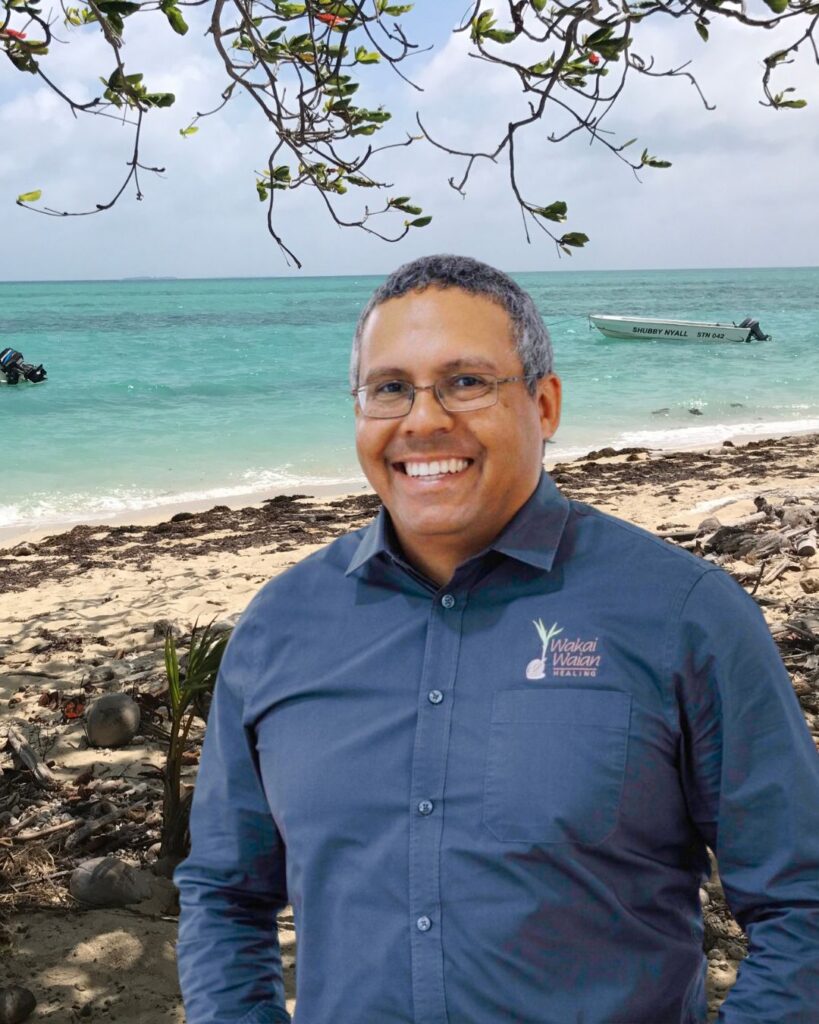
For Wakai Waian Healing CEO and psychologist Ed Mosby, there comes a point when listening has to lead somewhere.
“Consultation is important and listening is important, but talking at some point has to turn into progress and action. There’s a saying we hear across the Torres Strait that ‘talking doesn’t cook rice’. People have given us their time and told us what they need. We now have a responsibility to show that we have listened.”
Some of that work can begin now.
Among the urgent recommendations emerging from the Aftercare work was the need for more community-based mental health education, particularly around understanding mental health and reducing shame and stigma, as well as more regular and sustained access to professional mental health support.
Wakai Waian Healing will initially focus on Badu and Mer, working towards regular monthly visits from a psychologist alongside community-based mental health education. As Universal Aftercare develops, that approach can then be extended and adapted with other participating island communities.
“Progress doesn’t mean coming in with a ready-made solution,” Ed says. “It means acting on the things communities have already been very clear about, while continuing to sit with people and work out what the longer-term response should look like. On Badu and Mer, one of those first steps is regular monthly psychology support. Then we build from there.”
That distinction is important because one of Uncle Gabriel’s strongest messages throughout the project has been that there can be no single model imposed across Zenadth Kes.
“Different islands, each island is different and unique.”
This work will also continue in partnership with Torres and Cape Hospital and Health Service, Torres Health and local community organisations and leaders, recognising that no single service can meet the mental health and wellbeing needs of communities alone. By working together, sharing knowledge and strengthening connections between services, the aim is to make it easier for people to find the right support when they need it, while keeping community and culture at the centre of the response.
Phase One brought together the experiences of people across participating communities. Phase Two takes those findings back to individual islands and asks what they mean locally. The approach developed with people on Mer may not be the approach that works on Badu, Boigu, Poruma or Masig.
As Uncle Gabriel explains:
“If we empower them to not only find those solutions, but to work on those solutions, then we will see that change, we will see that impact, because it’s people coming up with their own solutions to their own issues.”
For too long, he says, outside systems have arrived with solutions developed elsewhere.
“Our experience over the years is that people have come in, some with good intentions, but it’s that external approach of people coming in and trying to give you already made solutions or things that work elsewhere.”
For Uncle Gabriel, this is also why mental health and wellbeing cannot be separated from Buway and culture, family, identity and belonging.
He speaks about the pressures facing people today, from housing and the cost of living to employment and education. Beneath many of those pressures, he believes, can be a deeper feeling of helplessness and uncertainty about identity. Culture provides a foundation from which people can find strength.
Language, Buway/Buai and kinship, genealogy, family connections, traditional lands, singing and dancing all connect people back to who they are and where they belong. Uncle Gabriel remembers something his father taught him:
“Culture is not a step backwards, it’s a foundation that we stand on to step forward.”
That understanding sits at the heart of Wakai Waian Healing and, as Uncle Gabriel explains, within the name itself.
Wakai Waian comes from Kala Lagaw Ya, in the Mabuyag dialect, and describes the practice of advising, counselling, supporting, caring, giving direction and helping someone find strength and healing. Traditionally, it takes place through family and kinship structures: older men advising younger men, older women advising younger women, and grandparents, aunties, uncles, brothers and sisters all having responsibilities to support one another.
“Everyone has an obligation for Wakai Waian. And that holds that kinship, that family together. Those structures still exist, we just need to utilise them again.”
That same principle shapes the cultural governance of Universal Aftercare. Wakai Waian Healing is Torres Strait Islander owned, while the Universal Aftercare Steering Committee brings together Torres Strait Islander Elders and people with cultural, clinical, professional and academic knowledge.
For Uncle Gabriel, the relationship between the Steering Committee and the organisation is itself an expression of Wakai Waian.
“The work the Steering Committee is providing to Wakai Waian Healing is actually Wakai Waian itself. Mentoring, advising, supporting, giving direction and caring for this organisation, Wakai Waian Healing, that provides that same very service when it goes out, both culturally and clinically, professionally.”
Another strong message to emerge from Phase One was the shame and stigma that can still surround conversations about mental health. Uncle Gabriel acknowledges that sometimes people may not feel comfortable discussing what they are experiencing with people they know.
“Sometimes you might be ashamed to talk for your own people.”
Regular access to psychologists and counsellors can provide another safe and confidential place to talk, while remaining connected to the cultural and family structures that already support people.
For Uncle Gabriel, breaking through that shame is ultimately about healing and strengthening one another.
“You need to find that healing inside of you, so that you can be strong and support one another to move forward.”
From listening to action
As Phase Two begins, Wakai Waian Healing in collaboration with Torres and Cape Hospital and Health Service and Torres Health Indigenous Corporation, will return to communities with the findings of Phase One. But the next conversation is not simply another consultation. It is about working out what happens next while beginning to act on the things communities have already identified as important.
What should mental health and wellbeing education look like locally? Who are the right people to connect community members with services? How should referral and follow-up work? How can visiting psychologists become a regular and trusted presence rather than an occasional service? And how do culture, family and community remain at the centre of all of it?
For Ed, this is where Universal Aftercare now needs to demonstrate progress.
“Communities have given us their time, their knowledge and their trust. Phase Two is about respecting that by moving forward. We will keep listening, because communities must continue to guide this work, but we also need to start doing. That’s how we move from understanding, to preparing for action, and ultimately to action on the ground.”
Uncle Gabriel’s message to people across Zenadth Kes is equally straightforward: when the team returns, become involved, make time to sit down and help determine what happens next.
Because Universal Aftercare is not about bringing a model to Zenadth Kes. It is about building it here.
“The people know what the issues are, but the people also know what the solutions are.”