Walking Alongside Community

Wakai Waian Healing’s growing occupational therapy team is helping Aboriginal Community Controlled Health Organisations meet increasing demand across regional and remote Queensland

Across Queensland, Aboriginal Community Controlled Health Organisations are facing a growing challenge.

Demand for occupational therapy continues to rise as more Elders seek to remain living safely at home, more children require early intervention, and more families look for culturally responsive allied health support. Yet across regional and remote Australia, occupational therapists remain one of the hardest health professionals to recruit.

Rather than competing with Aboriginal Medical Services, Wakai Waian Healing has taken a different approach.

The Torres Strait Islander-owned organisation is building partnerships with Aboriginal Community Controlled Health Organisations, providing experienced occupational therapists who work alongside local teams to strengthen services where additional capacity is needed.

One such partnership is with Bidgerdii Community Health Service, where Wakai Waian occupational therapists are helping address a backlog of My Aged Care occupational therapy assessments for Elders across Central Queensland.

Leading that work is occupational therapist Kassandra Cain.

Before retraining as an occupational therapist, Kassandra worked as a My Aged Care assessor, giving her a unique understanding of the aged care system and the practical supports that help people remain living independently.

After years working in finance and insurance, she decided to pursue what had always been a lifelong ambition.

“Occupational therapy had always been my goal,” Kassandra said.

“Five years ago I realised that if I didn’t pursue it then, I probably never would.”

Today, she spends much of her time visiting Elders in their homes alongside the Bidgerdii team, listening to their stories, identifying safety risks and helping them access practical supports ranging from grab rails and mobility equipment through to home modifications and assistive technology.

But for Kassandra, the equipment is only one part of the job.

“I feel incredibly privileged to be welcomed into people’s homes,” she said.

“Sometimes people simply want someone to sit down, have a yarn and genuinely listen.”

One of the biggest misconceptions she encounters is that occupational therapists are there to inspect or judge people’s homes.

“People often apologise because they think their house isn’t tidy enough,” she said.

“We’re not there to judge anyone. We’re there to support people, help them stay safe and help them continue living the life they want to live.”

Kassandra’s work reflects the broader philosophy of Wakai Waian Healing’s occupational therapy team: walking alongside people with respect, humility and practical support.

That philosophy is shared by fellow occupational therapist Jaimie Hunt, who joined Wakai Waian Healing after graduating with Honours from the University of the Sunshine Coast.

Living on Gubbi Gubbi Country, Jaimie was inspired to work alongside First Nations communities after university placements in Mount Isa highlighted both the inequities in access to healthcare and the strength and resilience of remote communities.

“I came to Wakai Waian Healing because of its strong cultural governance and its commitment to community-led practice,” Jaimie said.

“I know every community is different, and it’s my responsibility to keep learning from Elders, cultural leaders and the communities I work with.”

Providing mentorship across the growing team is Dr Ann Kennedy-Behr, the Organisation’s most experienced occupational therapist.

With more than three decades of clinical practice spanning aged care, stroke rehabilitation, paediatrics and international health, Dr Kennedy-Behr combines extensive clinical expertise with a passion for supporting children and families.

Her career has taken her from Australia to Germany, Austria, England, the United States and Vanuatu, while also completing a PhD at the University of Queensland focused on childhood developmental coordination disorder.

Despite her academic achievements, Dr Kennedy-Behr says clinical work remains where she feels most at home.

“Sitting on the floor, playing with children and working alongside families is what brings me the most joy,” she said.

For Emanjilli Hunt, occupational therapy is deeply personal.

A proud Wiradjuri woman, Emanjilli’s own experiences navigating mental health services inspired her to become a mental health occupational therapist committed to culturally safe, relationship-based care.

After spending eight years working across remote communities throughout the Northern Territory, including Alice Springs, Mutitjulu, Kintore and Tennant Creek, she developed a strong belief that healing happens through relationships, community and connection to Country.

“Healing is not just a clinical process,” Emanjilli said.

“It is relational. It happens through connection to land, culture and each other.”

The team’s Torres Strait Islander perspective is led by Jena Stephen, who was born and raised on Waibene (Thursday Island) and has family connections to Meriam Mer, Wagadagam and Ugar.

Jena believes health begins long before someone enters a clinic.

“My practice is grounded in whole-of-life care,” she said.

“Prevention is cultural. It means safe places, trusted relationships, clear communication and small, steady wins that strengthen health and wellbeing.”

Working across the Torres Strait, Jena supports people of all ages while helping design practical, community-led programs that reflect Torres Strait Islander ways of knowing, being and doing.

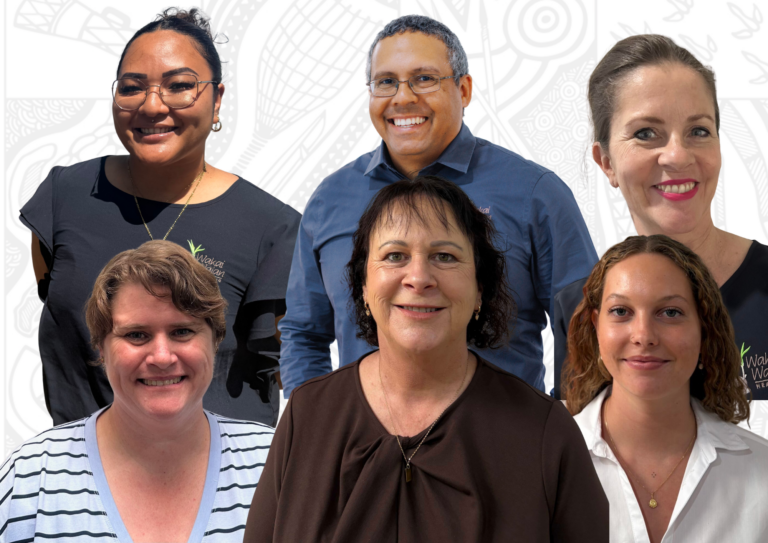
Together, the five occupational therapists bring expertise across aged care, mental health, paediatrics, disability, early intervention, rehabilitation and remote practice.

Their experience spans metropolitan hospitals, international health systems, universities, remote Aboriginal communities and Torres Strait Island communities.

Most importantly, they share a common belief that occupational therapy is about enabling people to live meaningful lives on their own terms.

For Aboriginal Community Controlled Health Organisations, that means access to an experienced occupational therapy team that can complement existing services, reduce waiting times and respond flexibly to local priorities.

The partnership with Bidgerdii demonstrates what is possible when Aboriginal organisations work together.

Rather than duplicating services, Wakai Waian Healing works alongside local teams, bringing additional clinical capacity while respecting the relationships, cultural knowledge and leadership that already exist within community.

As demand for occupational therapy continues to grow across Queensland, Wakai Waian Healing is expanding these partnerships with Aboriginal Community Controlled Health Organisations and Aboriginal Medical Services, ensuring more people can access culturally responsive occupational therapy close to home.

Because the strongest health systems are built through partnership, and the best outcomes happen when communities are supported by teams who are prepared to walk alongside them.

Story by Tom Hearn

More news